
Thứ Tư, 25 tháng 4, 2018

Britain 'considering rival' to EU Galileo satellite project

The UK is reportedly being shut out of elements of the programme because the EU cannot share information with non-EU members.
BAIKONUR, KAZAKHSTAN - DECEMBER 28:  In this handout photo supplied by the European Space Agency (ESA), A Russian Soyuz rocket carrying the Giove-A satellite, part of the Galileo GPS positioning system, blasts off at the Baikonur Cosmodrome on December 28, 2005 in Baikonur, Kazakhstan. The 3.8 billion-euro Galileo navigation network is designed to rival the current US system. It will give EU states guaranteed access to a space-borne precise timing and location service independent of the United States. (Photo by ESA via Getty Images)
Image:2005: Russian Soyuz rocket carries the Giove-A satellite, part of the Galileo GPS positioning system
The UK is considering launching its own satellite navigation system to rival the EU's Galileo project after being shut out of key elements of the programme, according to reports.
It comes after a row with Brussels over whether Britain can be trusted with sensitive European security information after the country voted to leave the bloc, the Financial Times reported.
Galileo is the EU's Global Satellite Navigation System (GNSS) which provides accurate positioning and timing information.
Business Secretary Greg Clark is reportedly taking legal advice on whether the UK Government can recoup the €1.4bn (£1.2bn) it has invested in the programme since 2003.
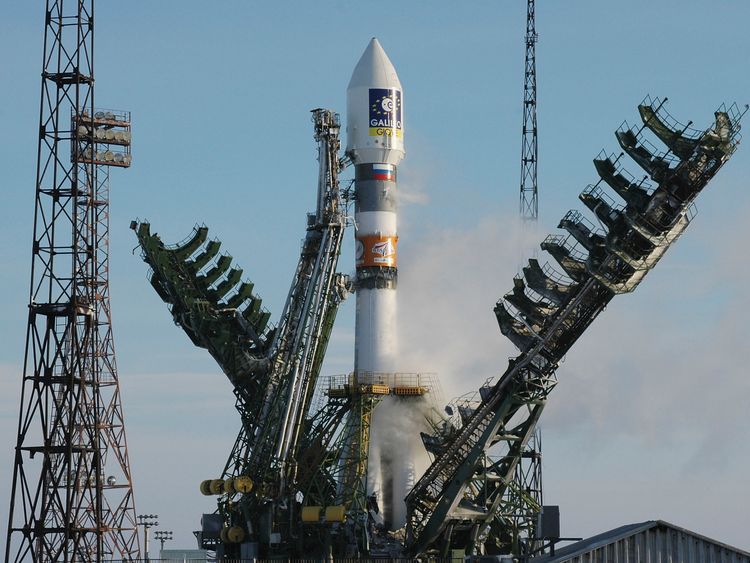
BAIKONUR, KAZAKHSTAN - DECEMBER 28:  In this handout photo supplied by the European Space Agency (ESA), A Russian Soyuz rocket carrying the Giove-A satellite, part of the Galileo GPS positioning system, blasts off at the Baikonur Cosmodrome on December 28, 2005 in Baikonur, Kazakhstan. The 3.8 billion-euro Galileo navigation network is designed to rival the current US system. It will give EU states guaranteed access to a space-borne precise timing and location service independent of the United States. (Photo by ESA via Getty Images)
Image:A UK Government official reportedly said the EU was 'playing hardball'
Mr Clark warned the European Commission's actions could threaten continuing "mutually beneficial" defence and security co-operation with Britain after it has left the EU.
He added the Government would continue to ensure the UK was able to take advantage of the new opportunities offered by the "commercial space age".
"We have made it clear we do not accept the commission's position on Galileo, which could seriously damage mutually beneficial collaboration on security and defence matters," he said.
"Given the UK's integral role in the programme, any such exclusion could cause years of delays and a cost increase stretching into the billions.
Baikonur, KAZAKHSTAN: (FILES) -- A file photo taken 15 December 2005 shows Europe's global navigation satellite system Galileo on display in the workshop of the Baikonur cosmodrome. The European Commission warned 15 March 2007 that it will examine new ways to complete the Galileo satellite navigation system after the project stalled amid doubts about profitibility. The system, worth around 1.5 billion euros (1.95 billion dollars) and meant to be in space in 2010, is aimed at breaking Europe's de
Image:Galileo on display in the workshop of the Baikonur cosmodrome
"We will continue to work with the UK space sector on this issue and through our modern industrial strategy will ensure the UK can realise the opportunities of the commercial space age."
The Government is said to be fighting back by preparing to block the procurement of the next batch of Galileo satellites - intended to rival the United States system - at a meeting of the European Space Agency council in Berlin.


Không có nhận xét nào:

Đăng nhận xét

Denmark awaits verdict on whether Kim Wall was murdered

Inventor Peter Madsen is accused of murdering and dismembering the young journalist, in a trial that has shocked a country. 09:17, UK, We...